

Jakarta, 6 May 2026 – Global business transformation is no longer solely determined by a company's scale, but also by its ability to adapt to changing markets, cultures, and sustainability demands. Amidst these dynamics, Indonesia is beginning to demonstrate its role not merely as a major market but also as a producer of business models capable of competing internationally. Issues concerning global business expansion, renewable energy innovation, and cross-cultural learning were the main focus of a series of academic visits by the Leeds Business School, University of Colorado Boulder (CU Boulder) to the Faculty of Business and Social Sciences (FBIS) at Atma Jaya Catholic University of Indonesia on Wednesday, 6 May 2026 at the Semanggi Campus.

Opening the event, Prof. Rosdiana Sijabat, S.E., M.Si., Ph.D., Vice Dean for P2M, Institutional Cooperation, Innovation, and Alumni of FBIS at AJCUI, expressed her appreciation for the visit of the Leeds Business School delegation from CU Boulder to AJCUI. "Through this general lecture, I hope the participants can learn more about Indonesian business and culture, as well as see firsthand how the business world is developing in Jakarta," said Prof. Rosdiana. Meanwhile, Alyssa Radtke, Associate Director of Specialized Programs at Leeds Business School at CU Boulder, also expressed her appreciation for the welcoming reception given by FBIS Unika Atma Jaya to the CU Boulder delegation. She called the visit a significant milestone, as it was CU Boulder's first program in Indonesia. "We are very grateful for the warm welcome here. This is a great start to building long-term connections and student collaborations between the two universities," said Alyssa.

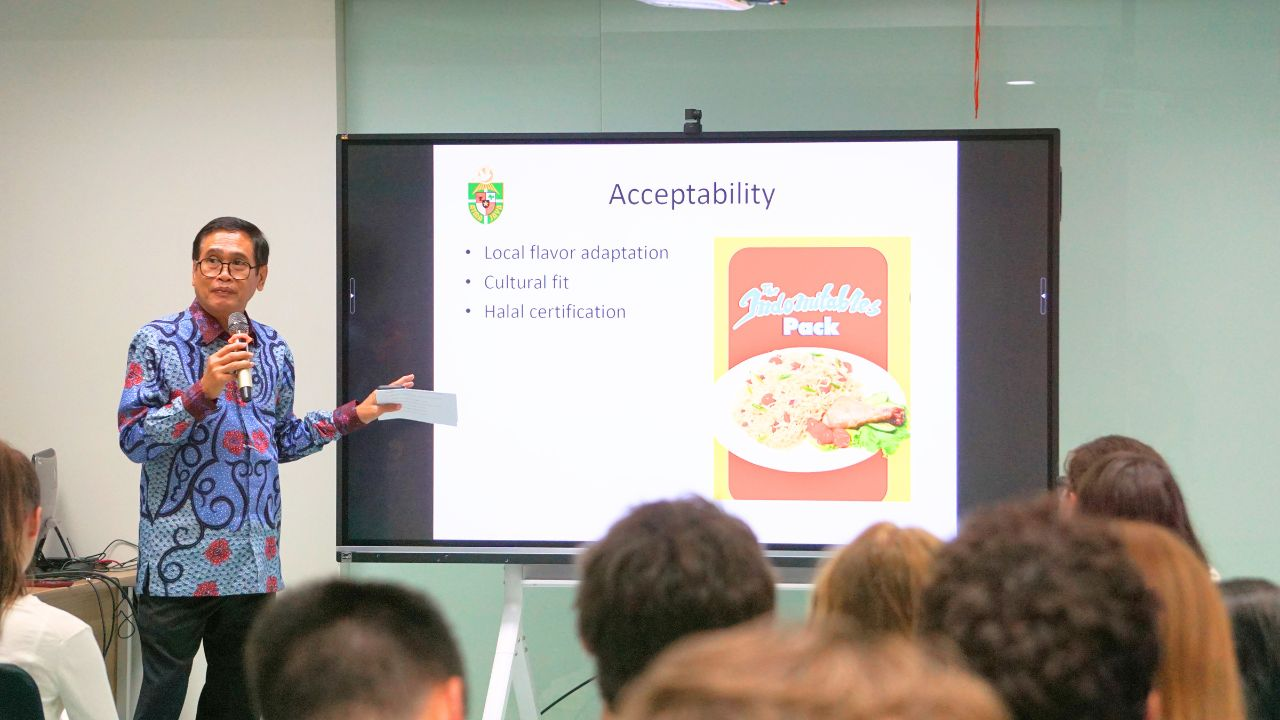
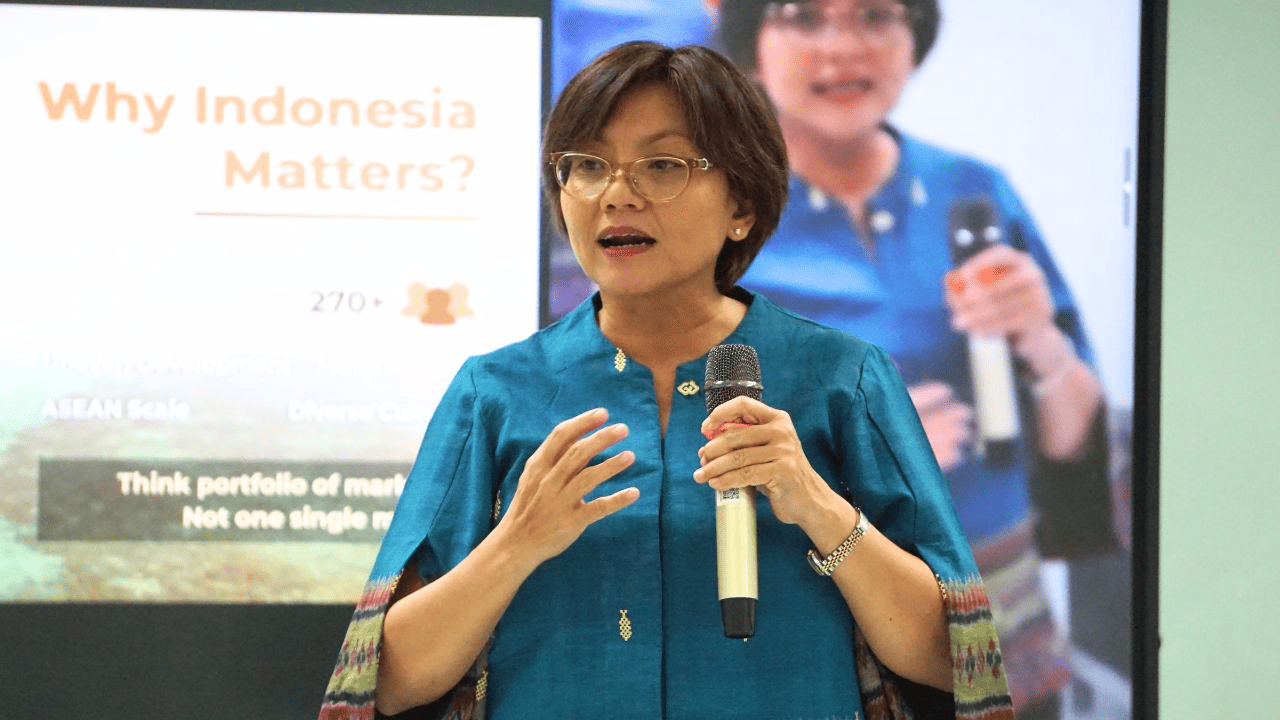
In a session called ‘Doing Business in Indonesia’, Chief Economist of the Indonesian Business Council and academic from Gadjah Mada University, Denni Puspa Purbasari, Ph.D., discussed the opportunities and challenges of doing business in Indonesia, which are considered to continue to develop along with changes in the regional economic landscape. According to Denni, overly formal and complex communication approaches often make it difficult for the public to understand the programs being implemented. "Use simple, straight-to-the-point language. Public participation is crucial, so programs must be made accessible and easy to understand," he explained. The discussion was then continued by Dr.rer.pol. A.Y. Agung Nugroho, a lecturer from the AJCUI Business Administration Study Program, with a presentation titled "From Local Roots to Global Routes: The Success Stories of Indonesian MNCs." Through a case study of Indomie, Dr. Agung explained how Indonesian companies were able to expand from the domestic market to the global market with cultural adaptation strategies, strong distribution, and affordable prices. "In the case of Indomie in Nigeria, the company has even managed to build a network of more than one million retailers and make its products part of people's routines," he explained.
Meanwhile, the issue of energy transition was also highlighted in a session presented by Xurya Co-Founder and VP of Operations, Philip Effendy. In his presentation, "Penetrating Indonesia's Renewable Energy Business," he explained that solar energy in Indonesia still has significant untapped potential. "Indonesia has enormous solar energy potential, but its utilization rate remains low. This is despite the growing industrial demand for sustainable energy," said Philip. He explained that Xurya provides integrated solar energy services, from design and installation to operation and maintenance of solar panel systems. As of the end of 2025, the company will have more than 281 operational projects and dozens of construction projects in various regions of Indonesia. This forum provides a space for exchanging insights on global business, innovation, and cross-cultural collaboration between academics and industry players from Indonesia and the United States. (ARK)

Jl. Jenderal Sudirman RT 02 RW 04 No. 51,
Karet Semanggi, Jakarta 12930
Whatsapp: +62 812-9898-8960
Telp. (62-21) 5727615, 5703306, 5708823
Ext. 356 (Operator), 123 (Informasi Pendaftaran Mahasiswa), 413 (Marketing), 359 (Admisi), 347 (Corcomm)
E-mail: corcomm@atmajaya.ac.id





Copyright © 2023 Unika Atma Jaya. All Rights Reserved.
Kebijakan Privasi