
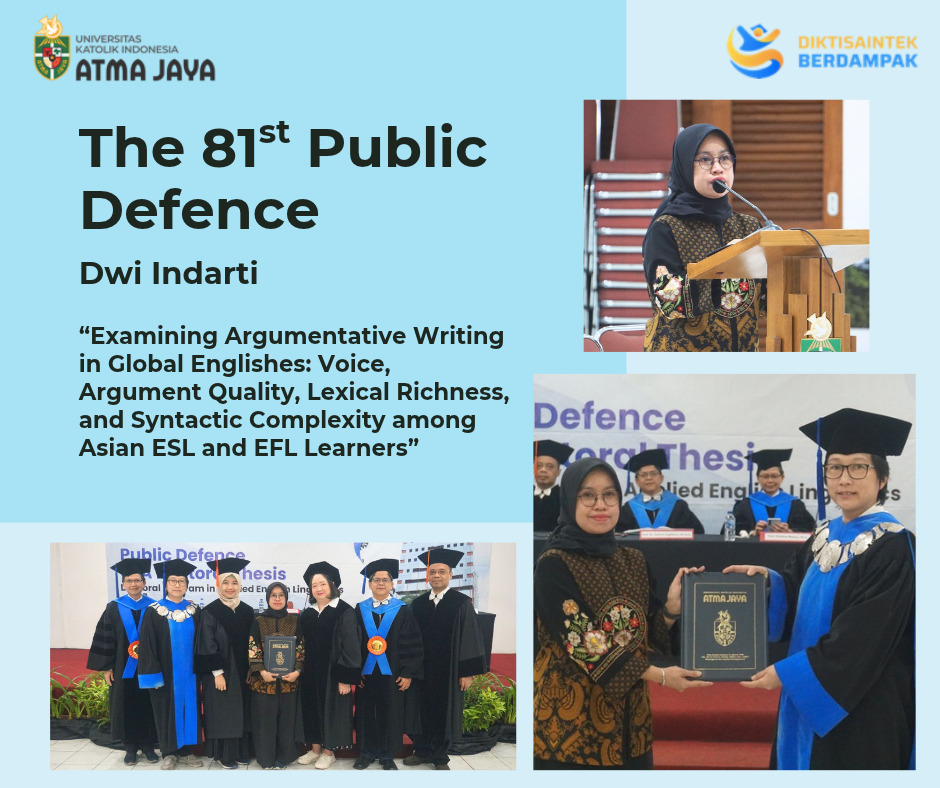
As English continues to serve as a common academic language across different linguistic background, it becomes essential to understand how learners build arguments in English for both theoretical and teaching purposes. Earlier studies have explored areas such as authorial voice, argument structure, lexical richness, and syntactic complexity, but most of them have examined these aspects separately. In addition, there is still limited comparative research that systematically looks at ESL and EFL learners within one unified framework. Because of this fragmentation, our understanding of how rhetorical and linguistic features work together in shaping argumentative writing remain incomplete. To address this gap, the present study examines differences between ESL and EFL learners’ argumentative writing by combining macro-level rhetorical analysis with micro-level linguistic measures. The study focuses on two main research questions: (1) How does argumentative writing differ between ESL and EFL learners? And (2) How gender and topic differ in authorial voice, argument quality, lexical richness, and syntactic complexity in their essays? To answer these questions, the study uses a mixed-method, corpus-based design. The data consist of 720 argumentative essays taken from the International Corpus Network of Asian Learners of English (ICNALE), representing balanced groups of ESL learners (Pakistan, the Philippines, and Singapore) and EFL learners (China, Indonesia, and South Korea) at the B1_2 proficiency level. Authorial voice and argument quality were assessed using validated holistic rubrics and Toulmin Argument Pattern framework. Lexical richness and syntactic complexity were measured with computational tools, including Coh-Metrix and the L2 Syntactic Complexity Analyzer (L2SCA). Quantitative statistical analysis was supported by qualitative interpretation to capture detailed cross-group patterns.
The results show considerable similarity between ESL and EFL learners across most aspects of argumentative writing. Contrary to common expectations, ESL learners did not consistently perform better than EFL learners. Although ESL writers showed slightly higher lexical diversity and lexical density, EFL writers demonstrated higher lexical sophistication. No meaningful differences appeared in overall voice strength or syntactic complexity. However, topic had a strong effect. Essays about part-time jobs produced more complex syntax and clearer stance features than essays about smoking. Gender differences were generally small, though female ESL learners displayed stronger evaluative voice, while male learners tended to use more assertive stance markers. Overall, this study highlights that L2 argumentative writing in Global Englishes contexts is multidimensional and highly sensitive to task conditions. The findings challenge the assumption that ESL learners are naturally better writers simply because of greater exposure of English and instead emphasize the importance of instructional practices and topic engagement. From pedagogical perspective, the results suggest that writing instruction should explicitly teach voice, argument structure, and advanced lexical-grammatical features while also paying close attention to task design. This study contributes to L2 writing research by proposing a more holistic view of argumentative competence and by providing empirical support for the growing similarity between ESL and EFL learners in global Englishes.
We would like to convey our sincere and heartfelt congratulations to Dr.Li. Dwi Indarti for this achievement. We look forward to her future success and valuable contributions to the field of English applied linguistics.

Jl. Jenderal Sudirman RT 02 RW 04 No. 51,
Karet Semanggi, Jakarta 12930
Whatsapp: +62 812-9898-8960
Phone. (62-21) 5727615, 5703306, 5708823
Ext. 356 (Operator), 123 (Student Registration Information), 413 (Marketing), 359 (Admission), 347 (Corcomm)
E-mail: corcomm@atmajaya.ac.id





Copyright © 2023 Unika Atma Jaya. All Rights Reserved.
Privacy Policy